
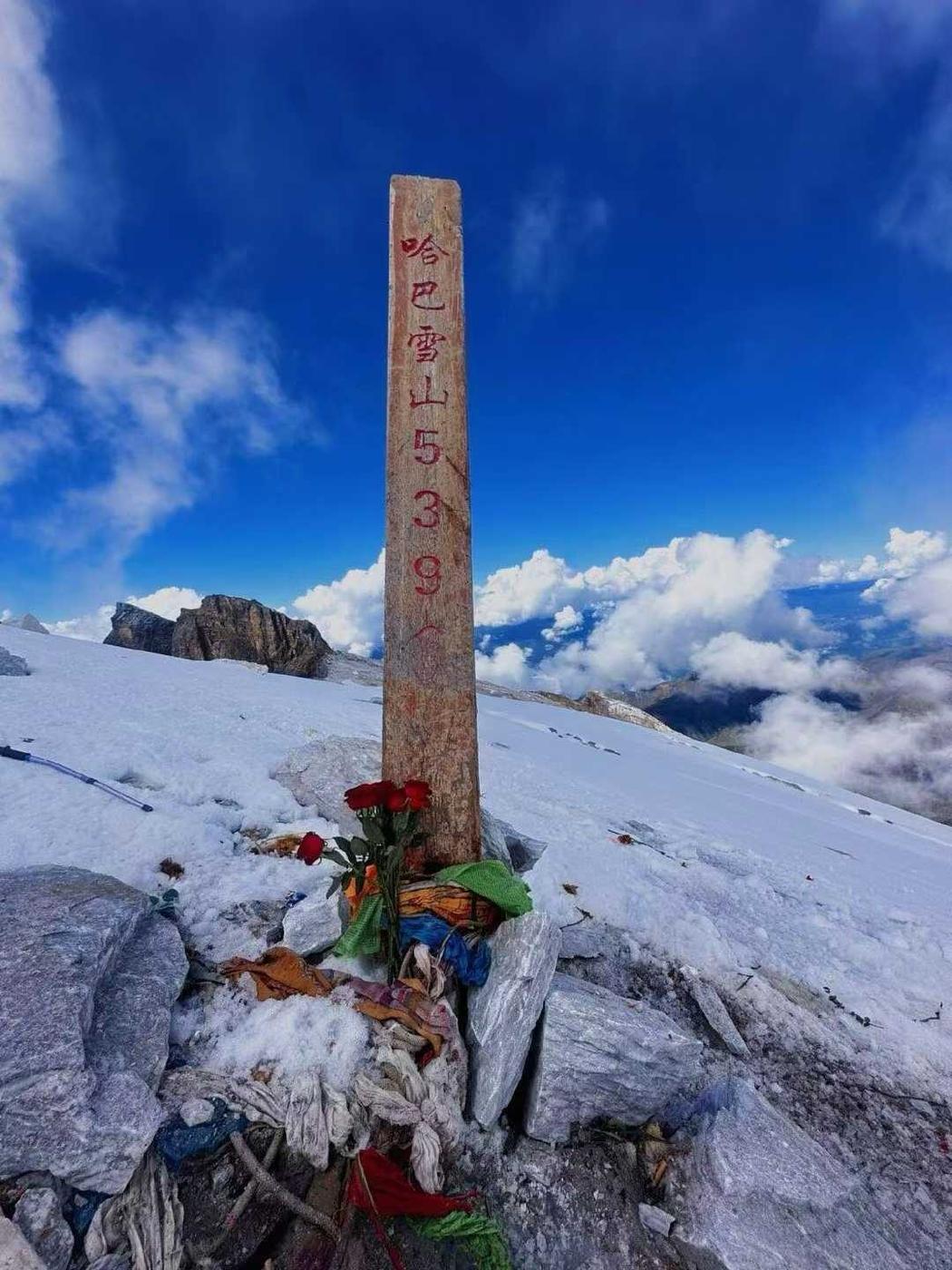
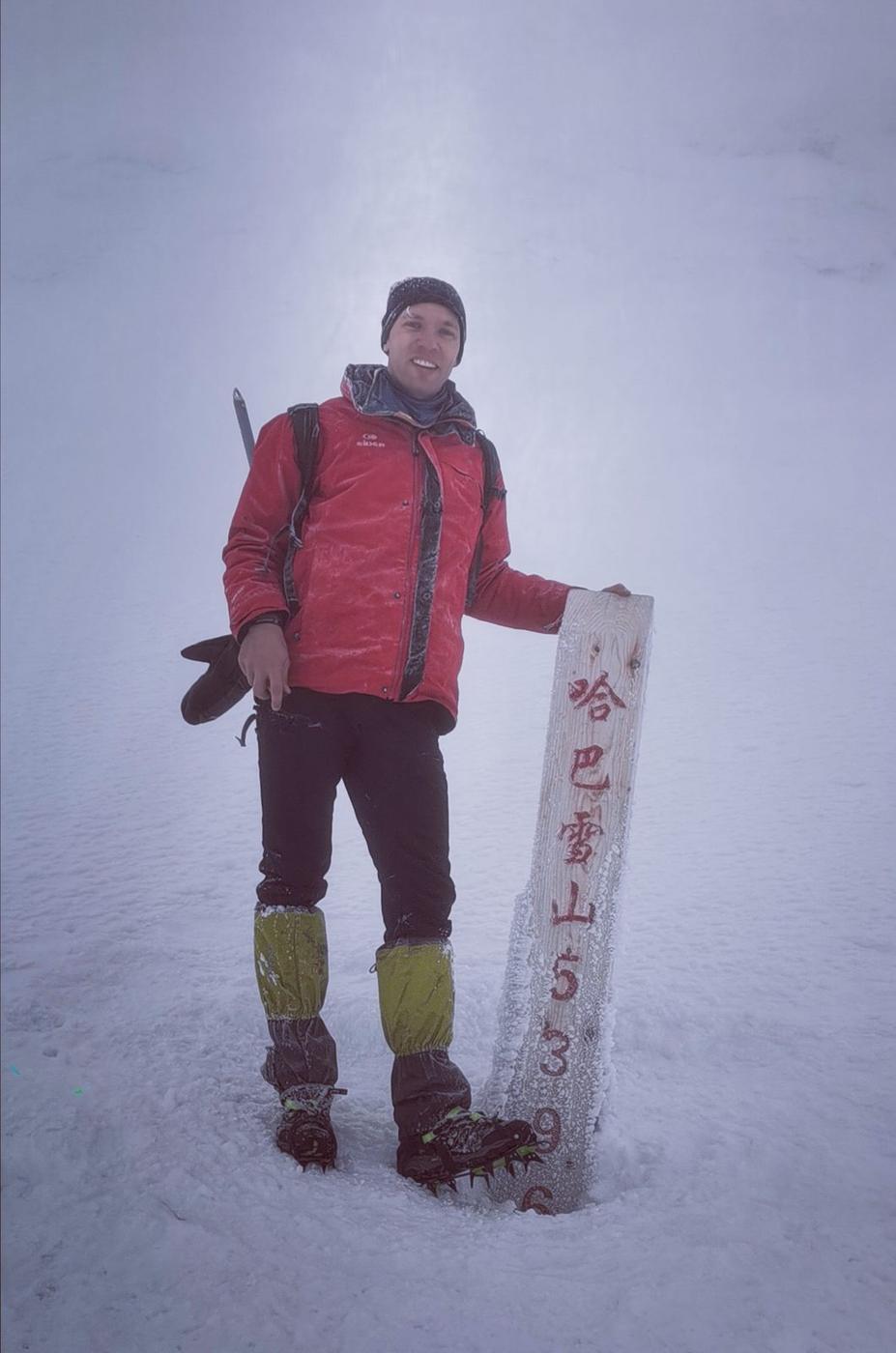
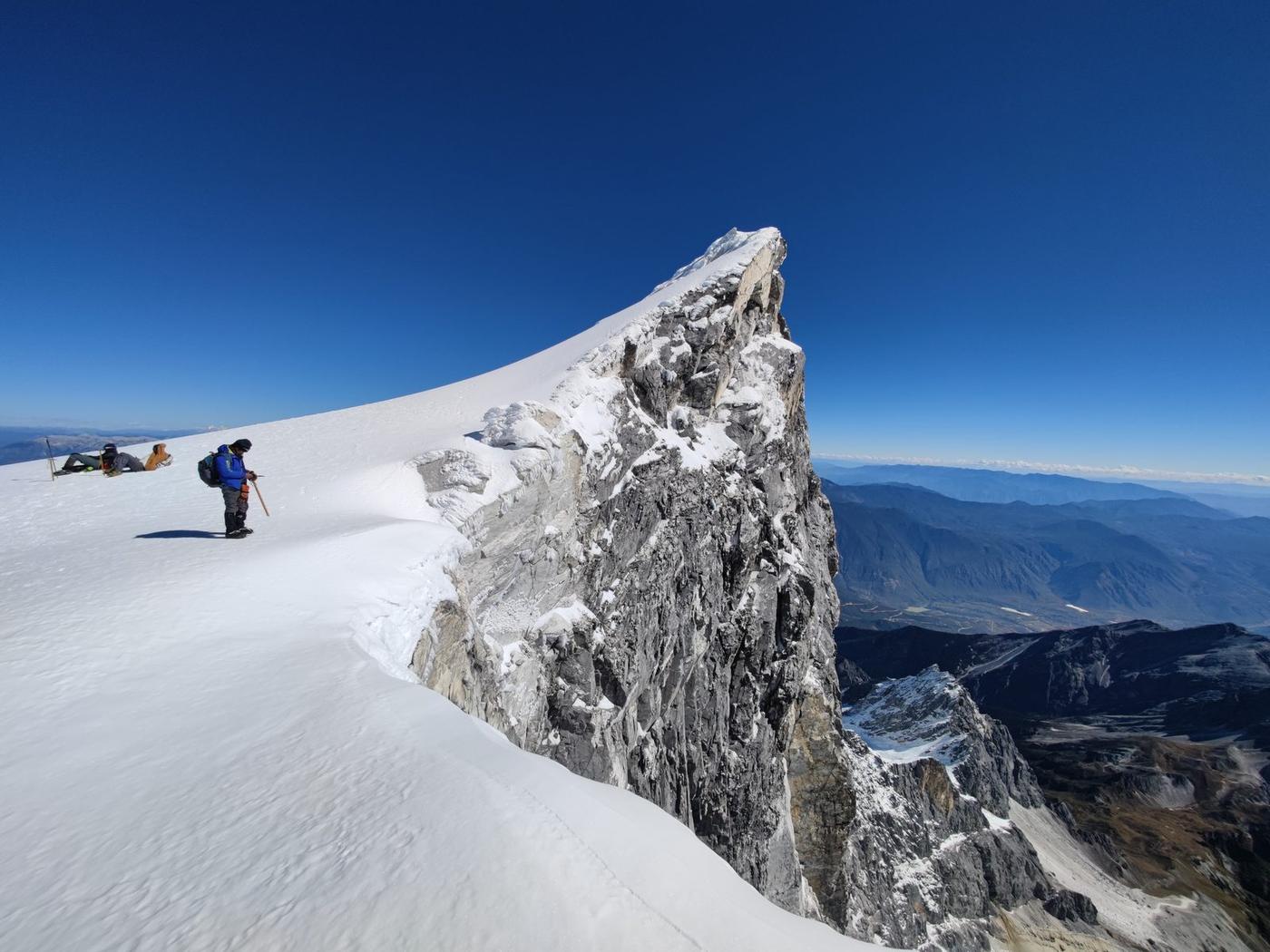
A trip in two acts: first the legendary Tiger Leaping Gorge on foot, one of the deepest and most dramatic river canyons in the world, then a full mountaineering ascent of Haba Snow Mountain (5,396m), on the Tibetan edge of Shangri-La in northern Yunnan. With a private guide, crampons and an ice axe, the final morning starts at 2am for a summit reached by very few travellers — a genuine trekking peak, not just a viewpoint.
Trip Highlights
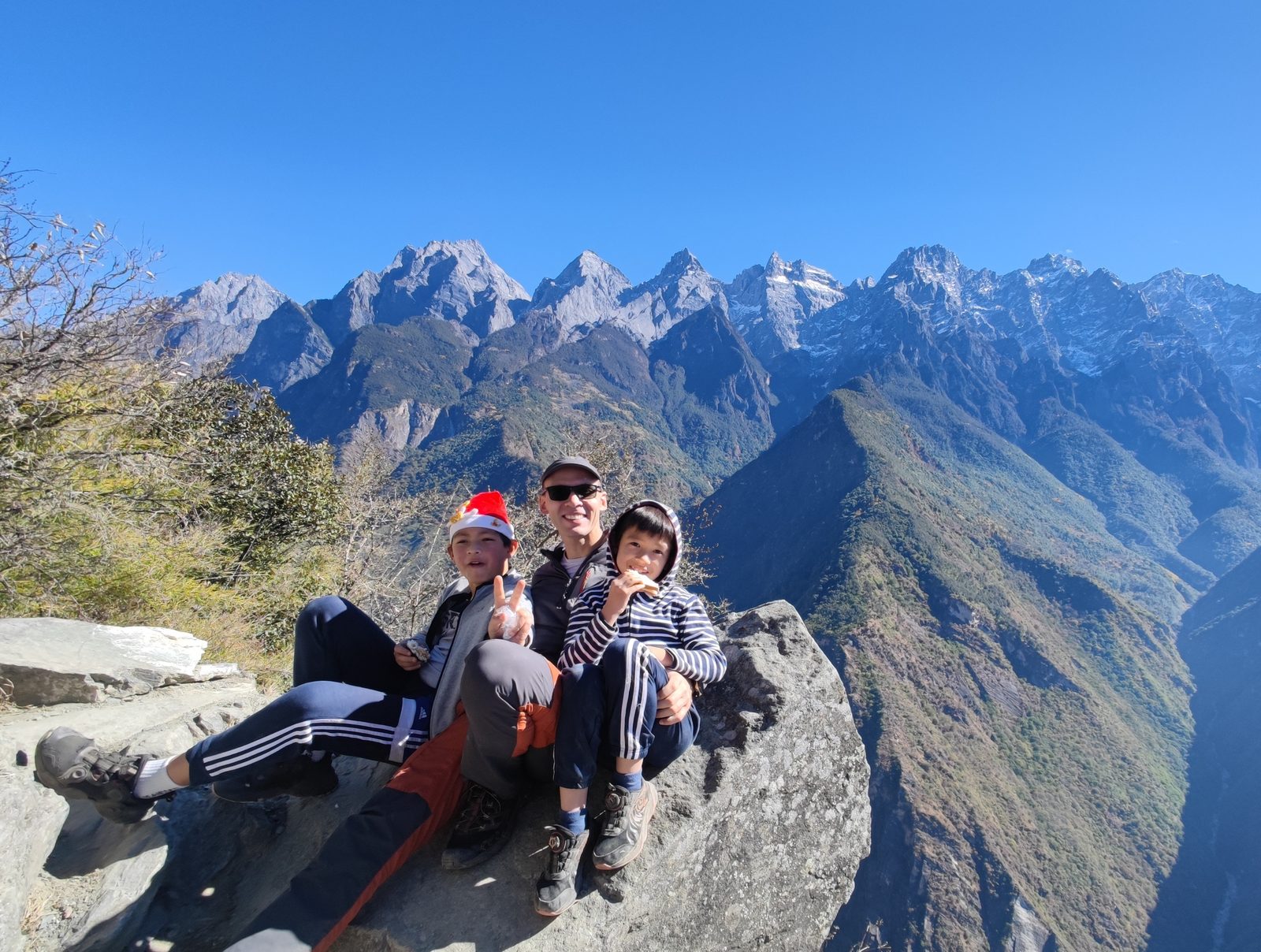
Two days on the legendary Tiger Leaping Gorge
The trip opens on the classic high trail above one of the world's deepest gorges, before continuing into Haba's quieter valleys on the edge of the Tibetan world.
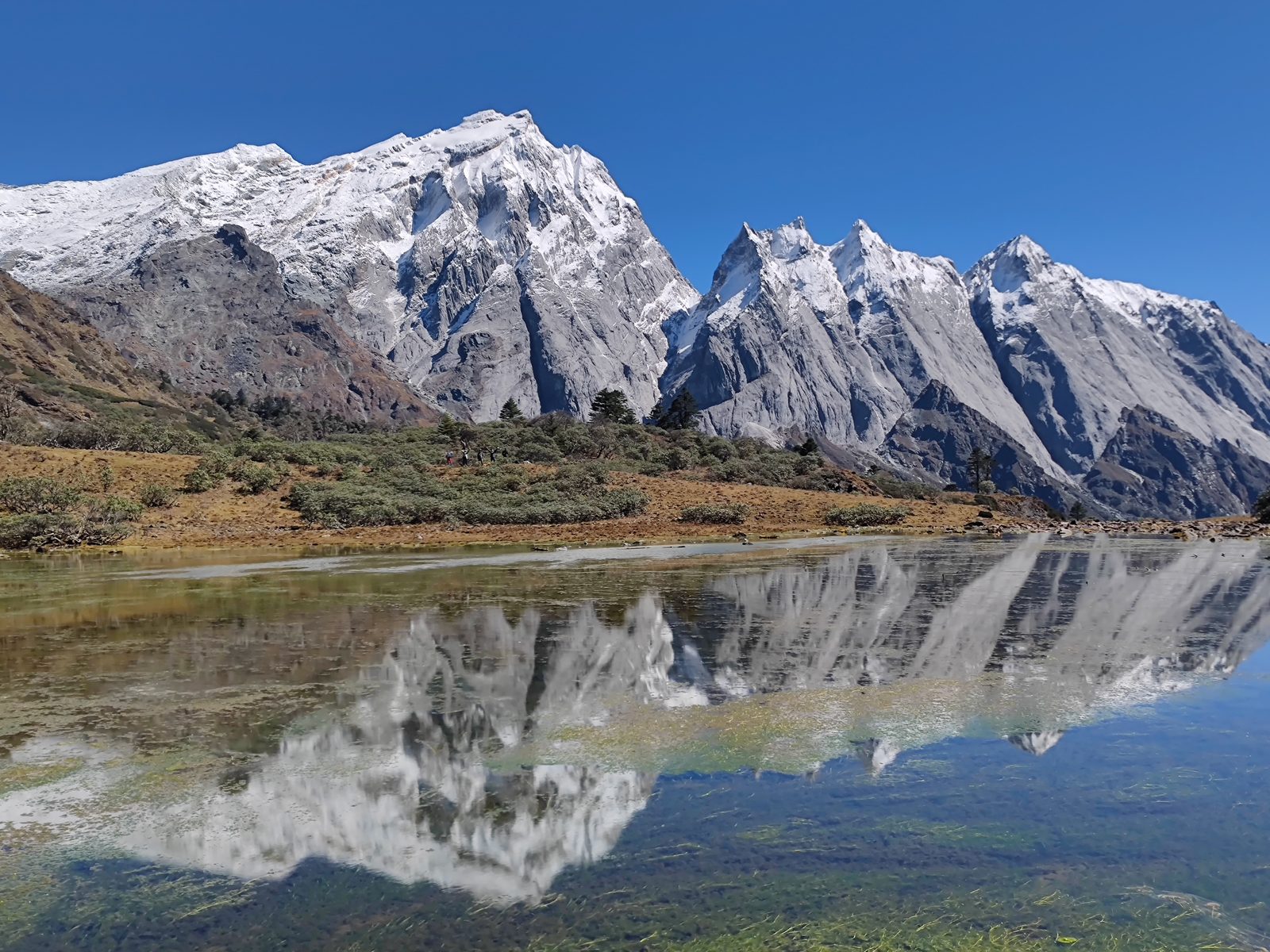
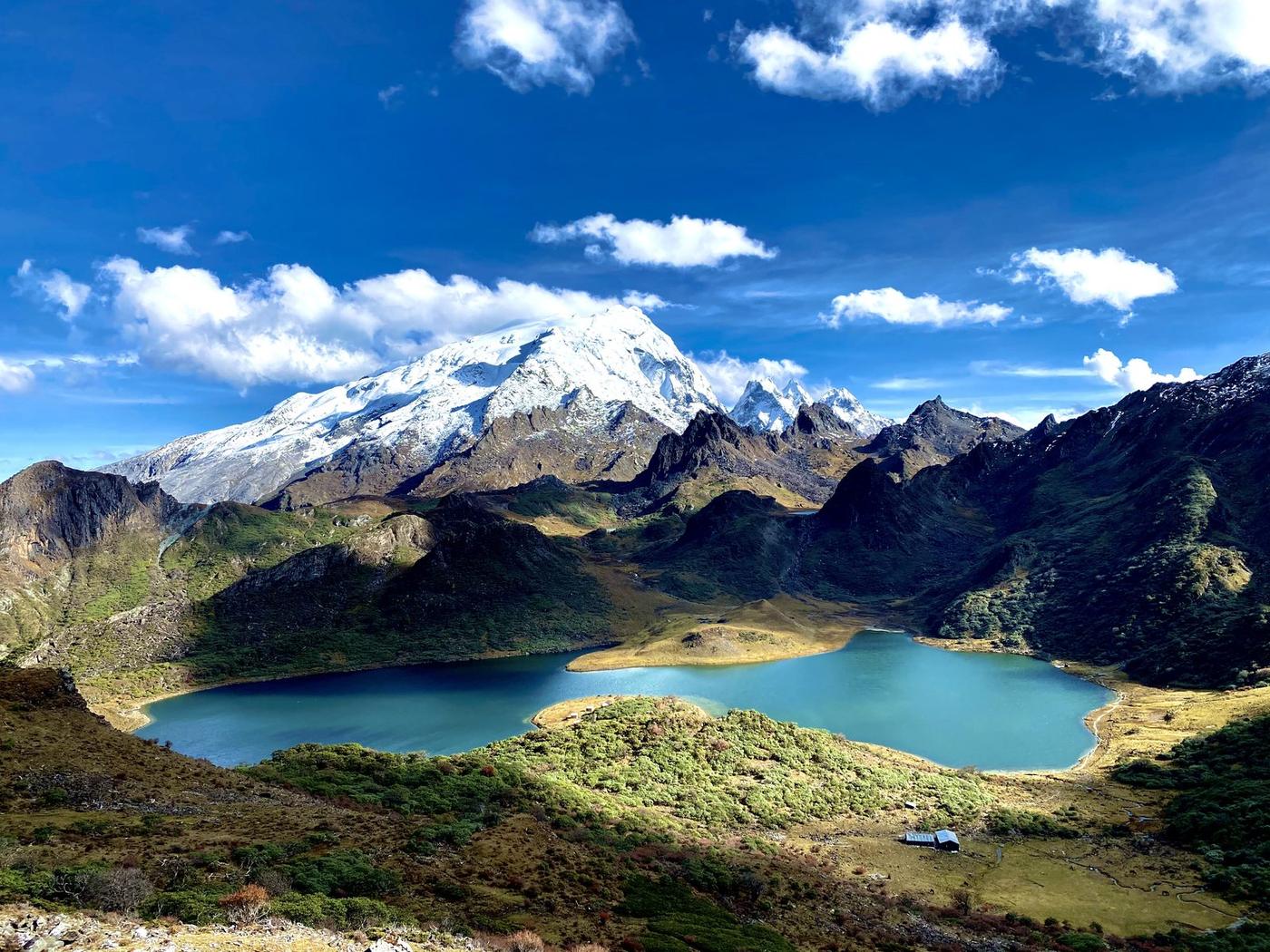
Reflections at Twin Lakes
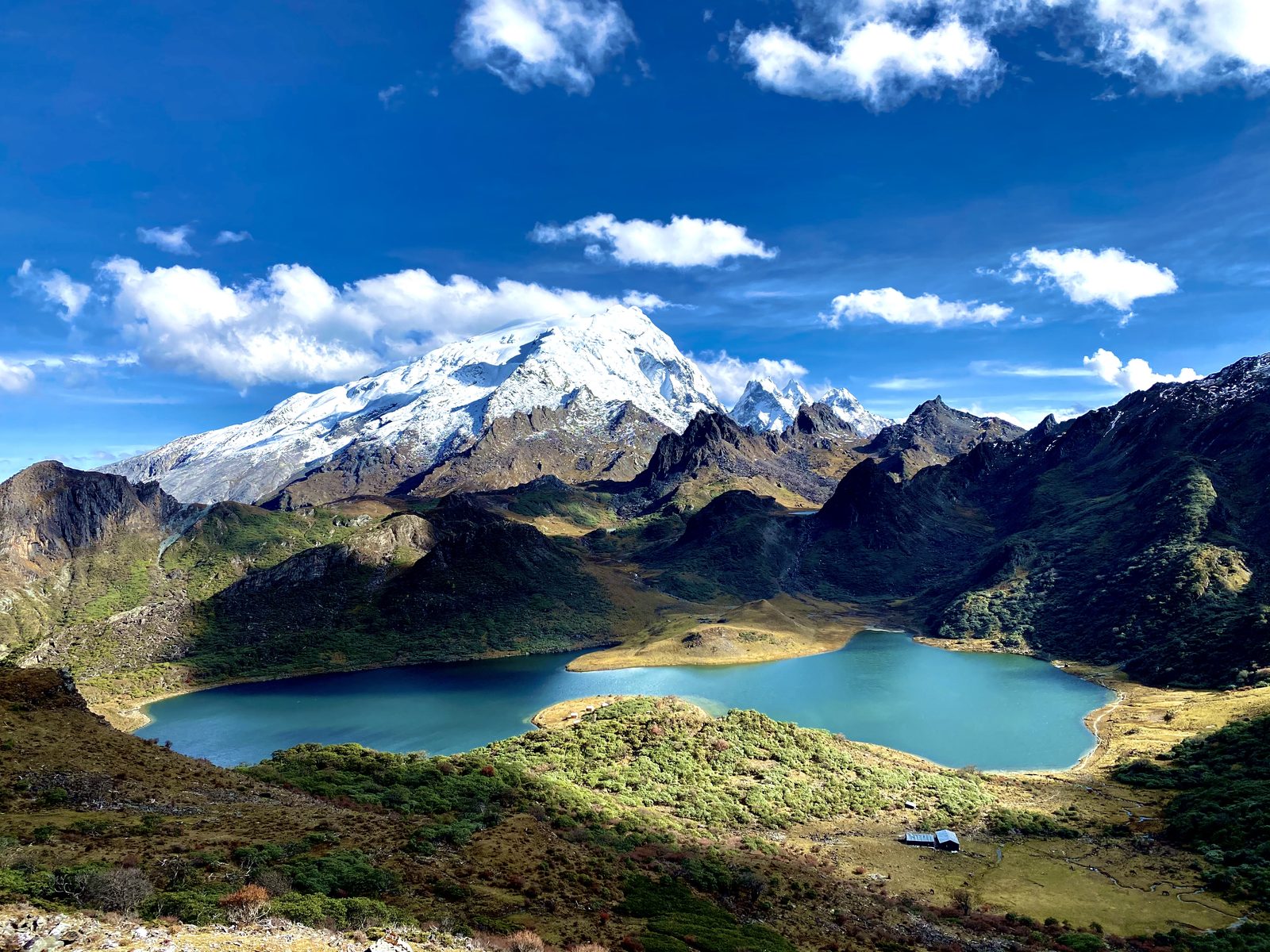
At 4,050m, two glacial lakes lie beneath Haba's summit, calm enough on a still morning to mirror the entire mountain.
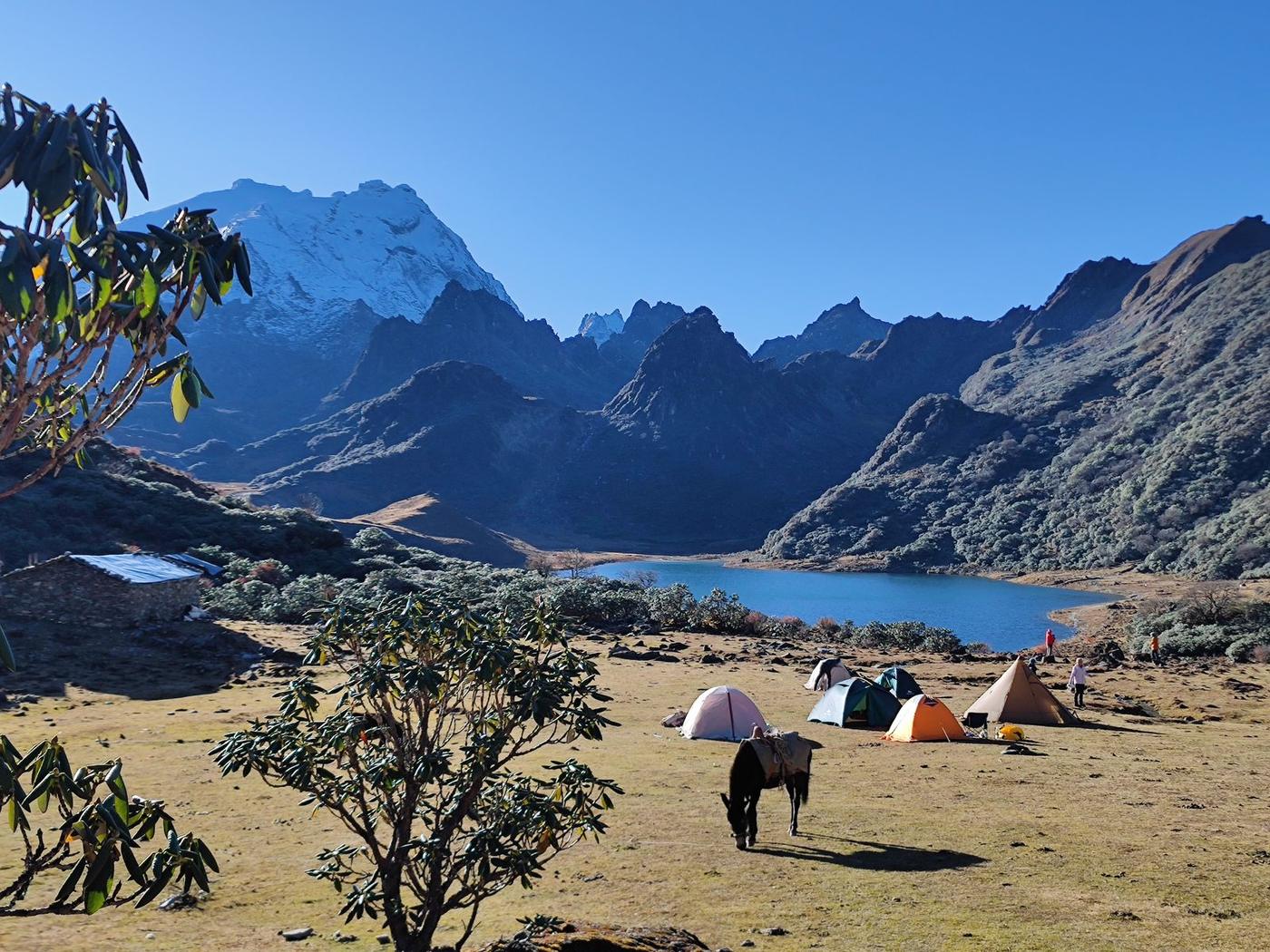
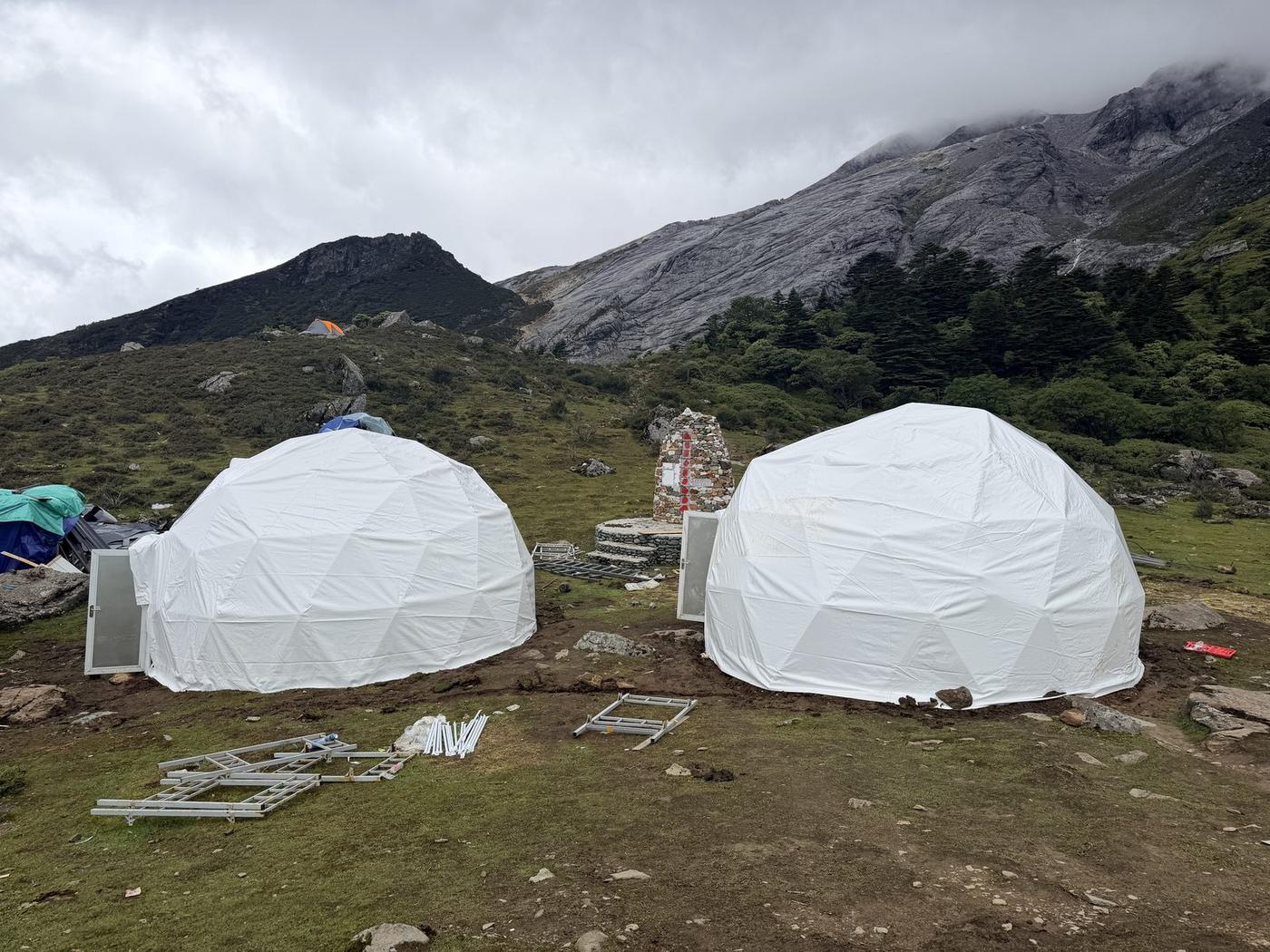
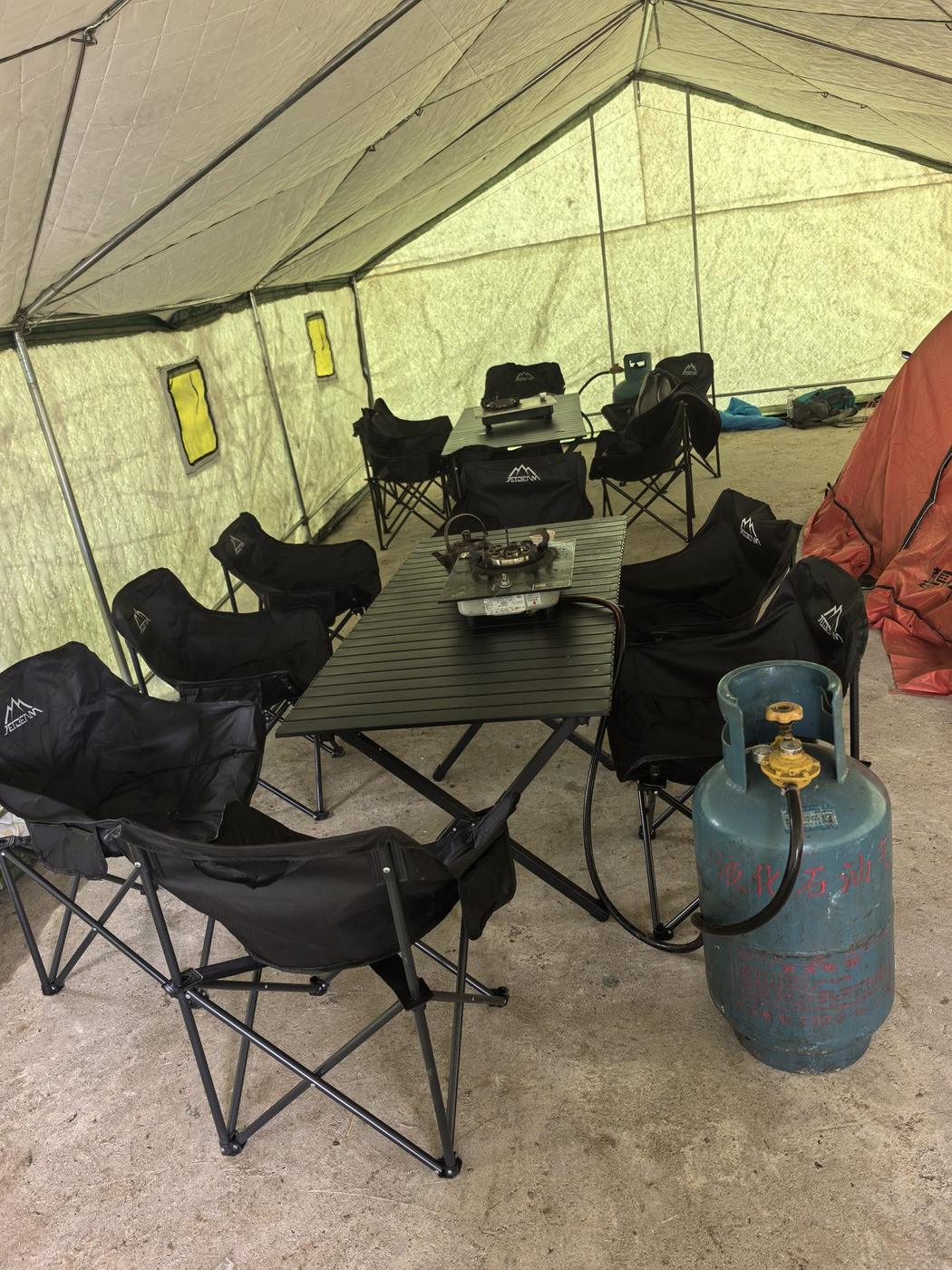
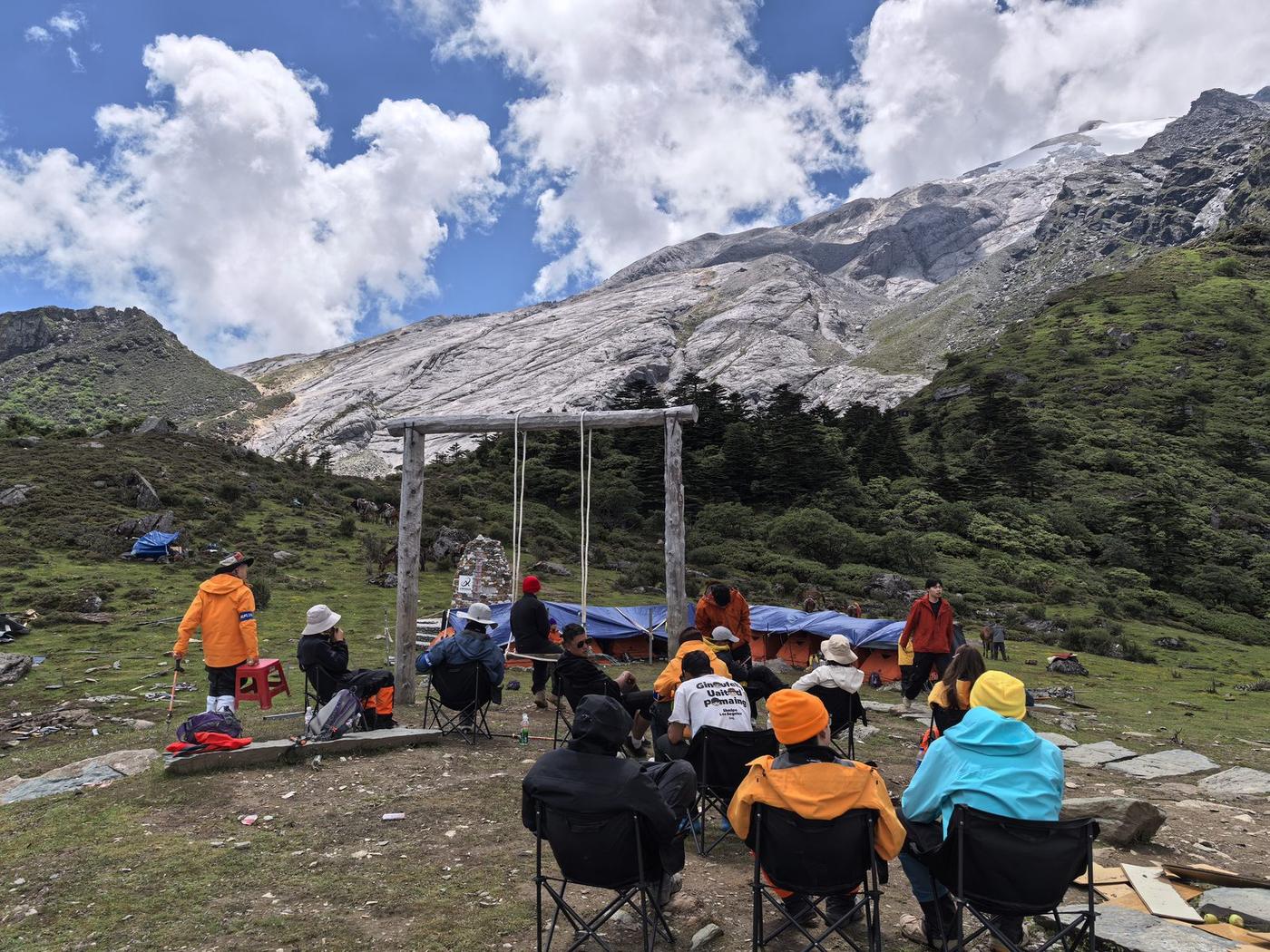
A proper base camp at 4,160m
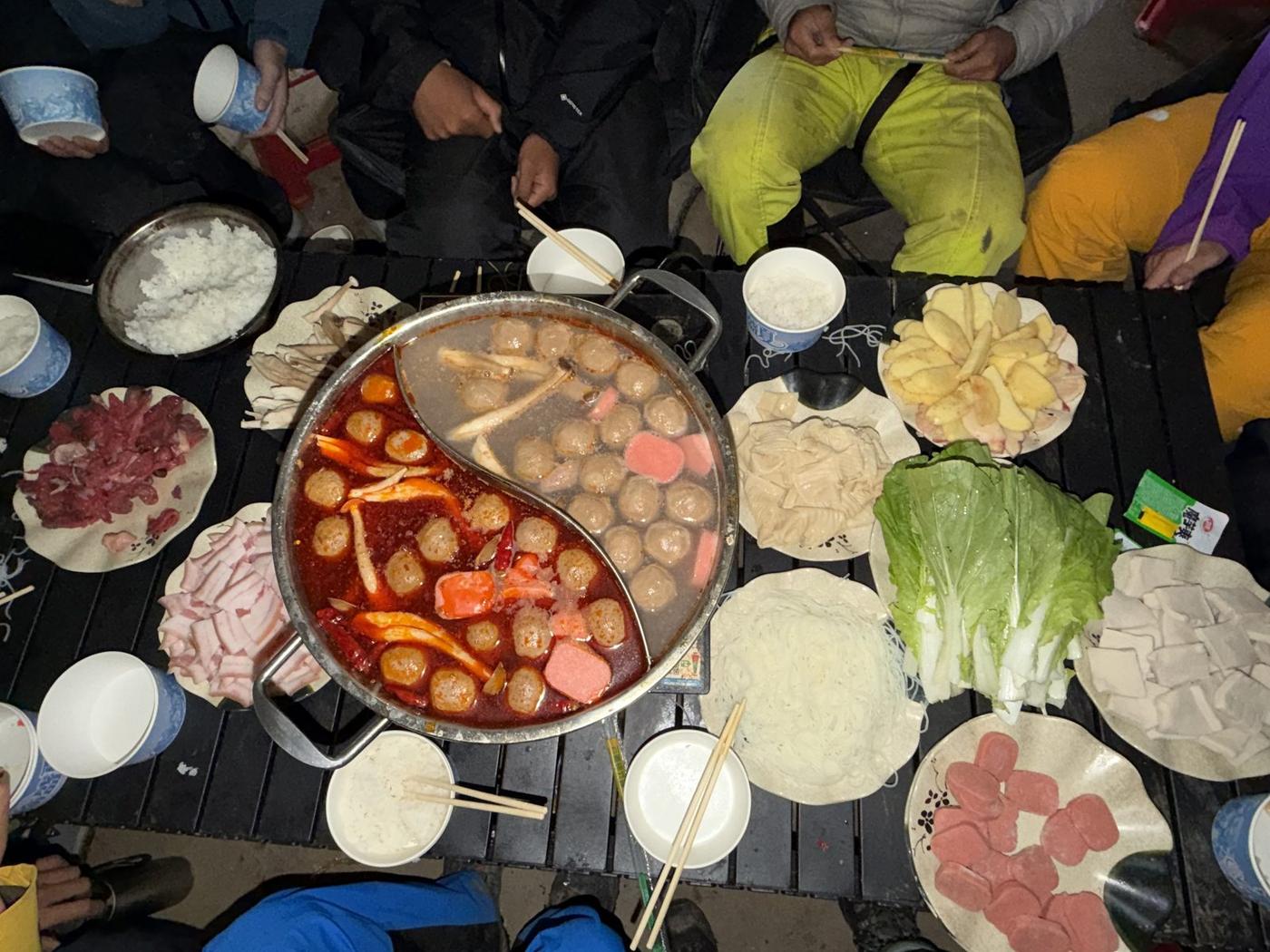
Comfortable dome tents, a heated mess tent and hot meals right below the mountain, with a night to rest and prepare before the climb.
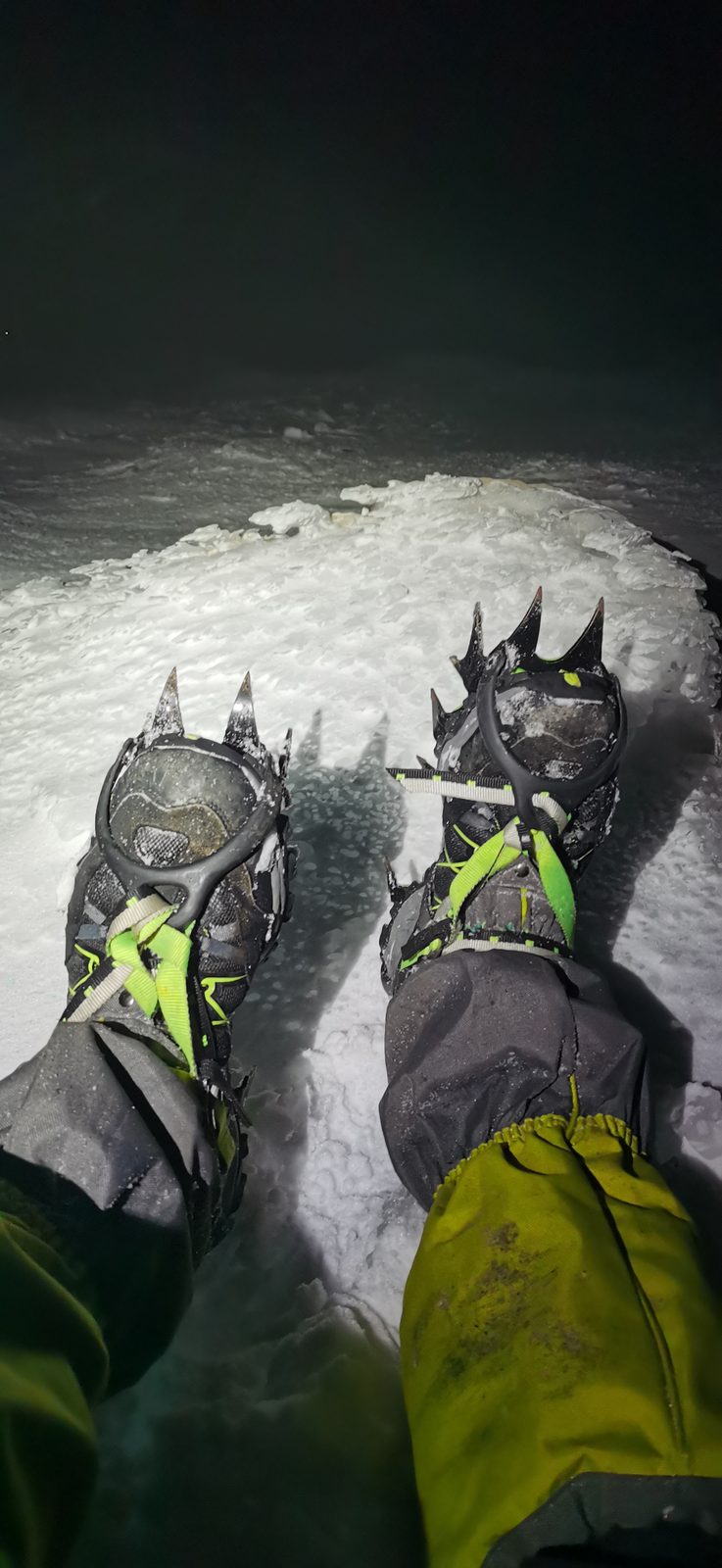
Crampons on, guide by your side
Every summit attempt is led by your own certified mountain guide, with a full briefing on crampons and ice axe technique at Base Camp.
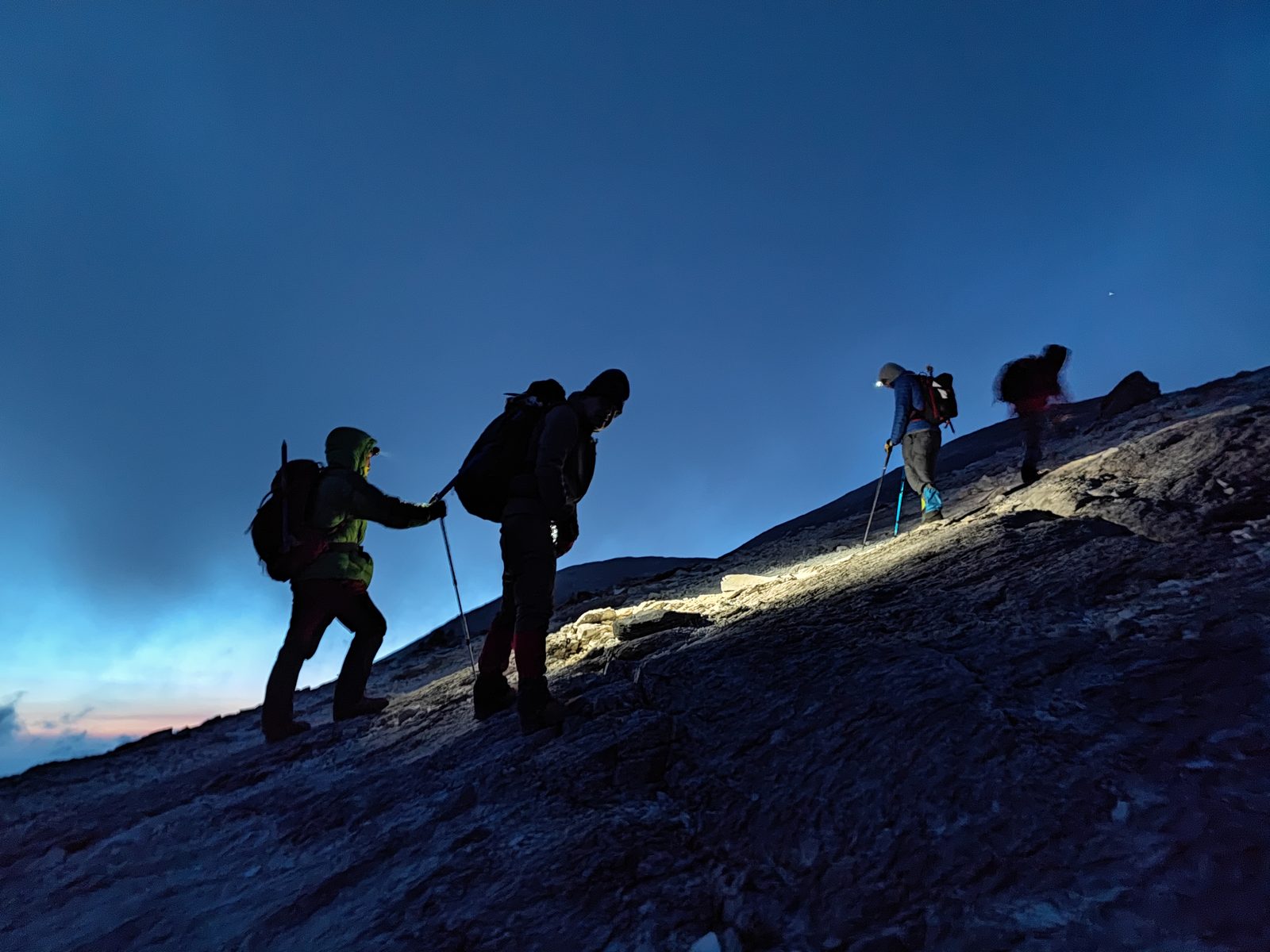
A 2am start under the stars
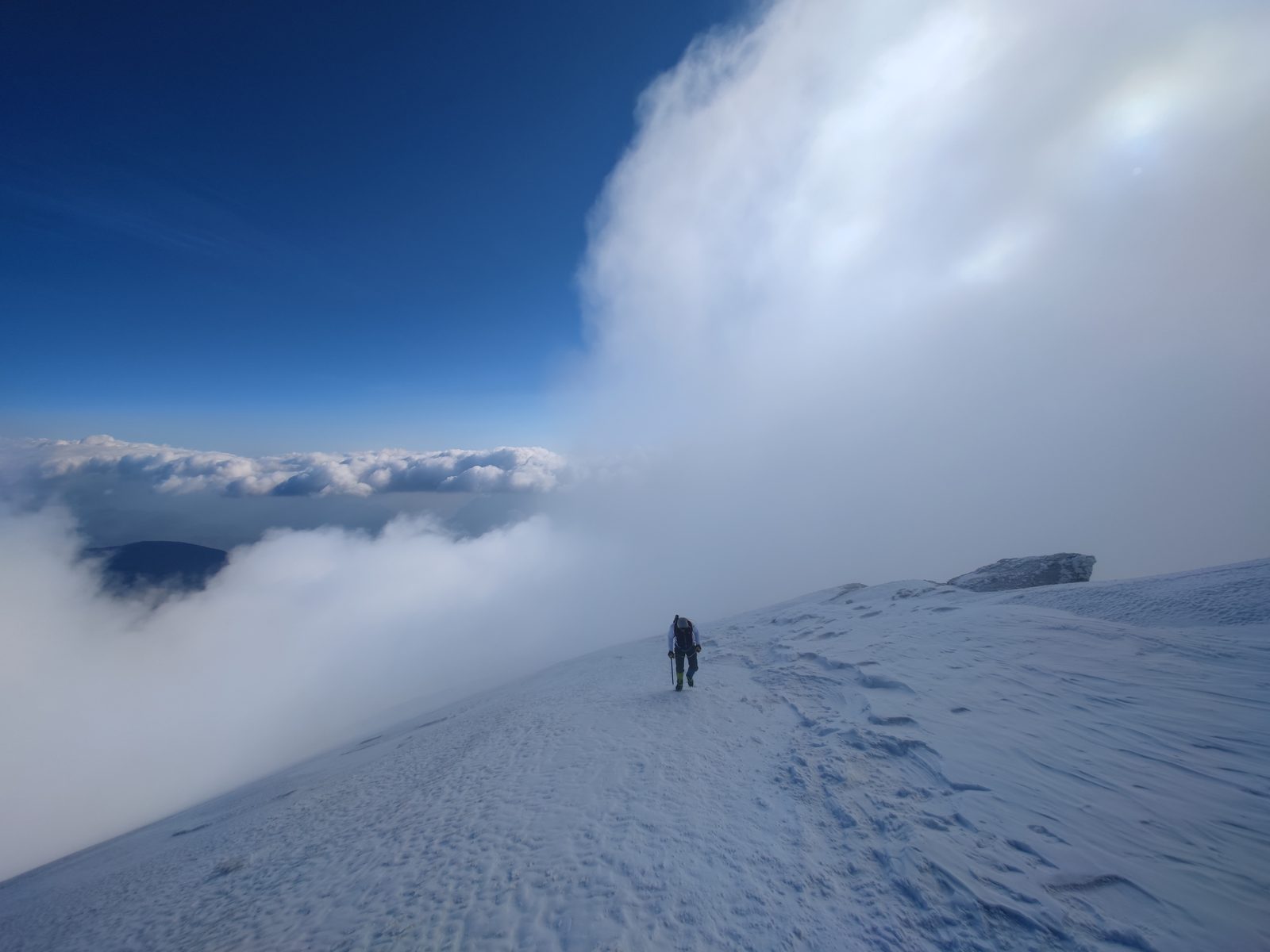
Roped up and headlamps on, the final push begins hours before dawn, reaching the snow line by sunrise.
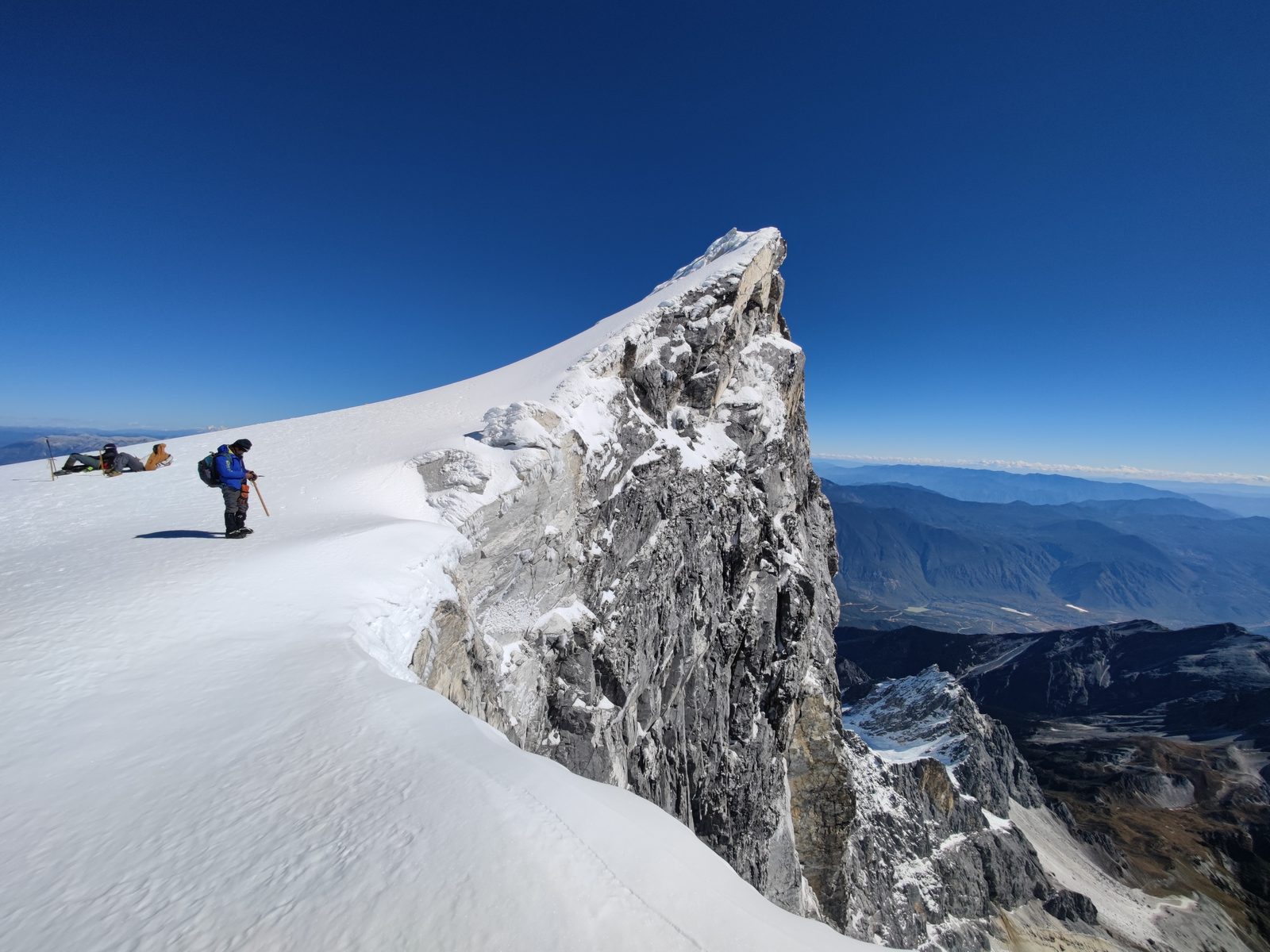
Standing on Haba's 5,396m summit
One of Yunnan's classic trekking peaks, with Jade Dragon Snow Mountain rising across the Jinsha River gorge.
Route Overview
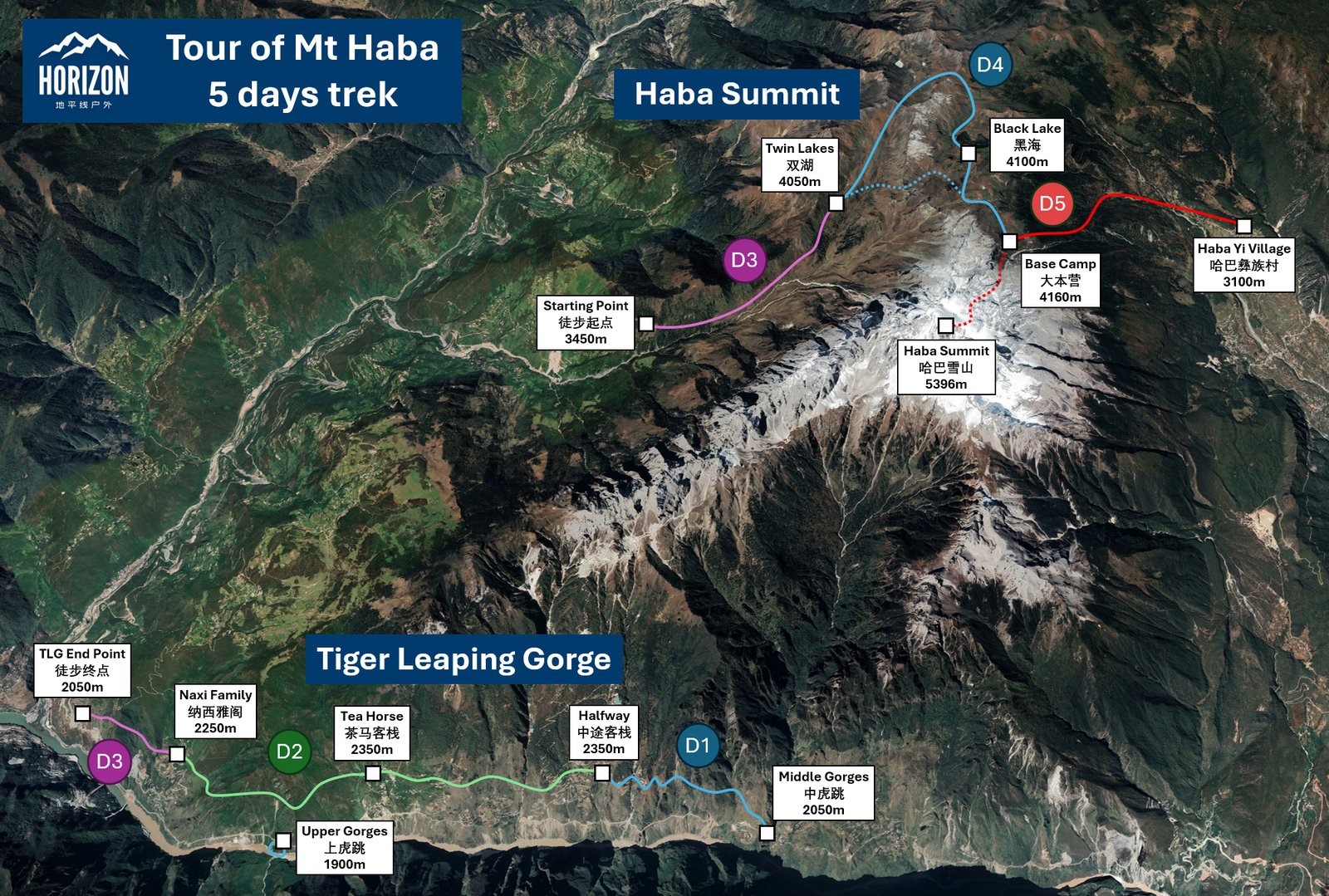
Lijiang/Shangri-La → Halfway GH
Upper Tiger Leaping Gorge, then the classic high trail begins.→ Naxi Family GH
A gentler day on the high trail above the gorge.→ Haba Twin Lakes
Finish Tiger Leaping Gorge, then climb to 4,050m.→ Haba Base Camp
High pass, first close views of the summit, 4,160m.Summit (5,396m) → Haba Village
Alpine start, crampons and ice axe, then a long descent.→ Lijiang or Shangri-La
Trip ends, transfer back to town.Full Itinerary
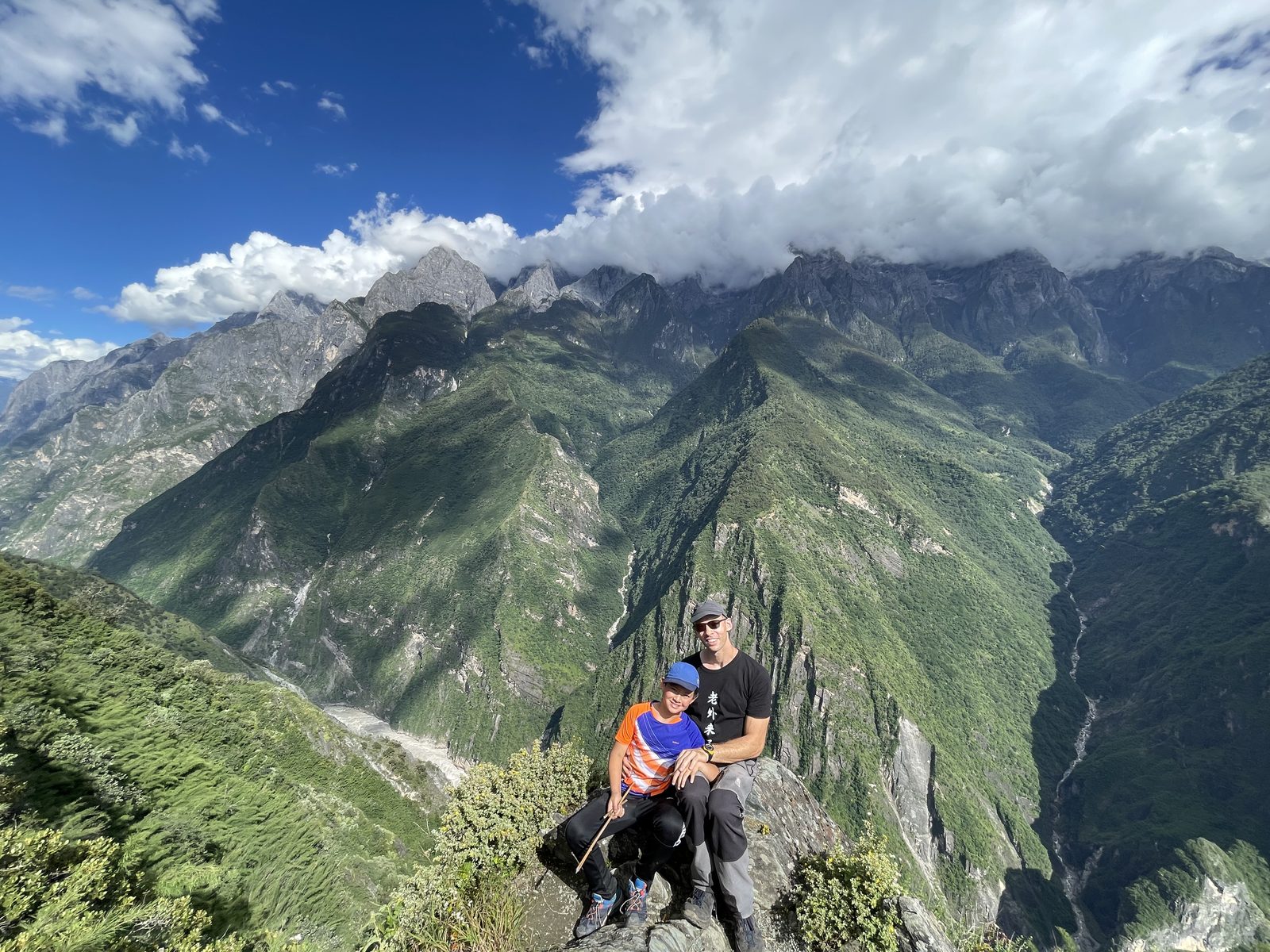
Lijiang/Shangri-La → Halfway Guesthouse
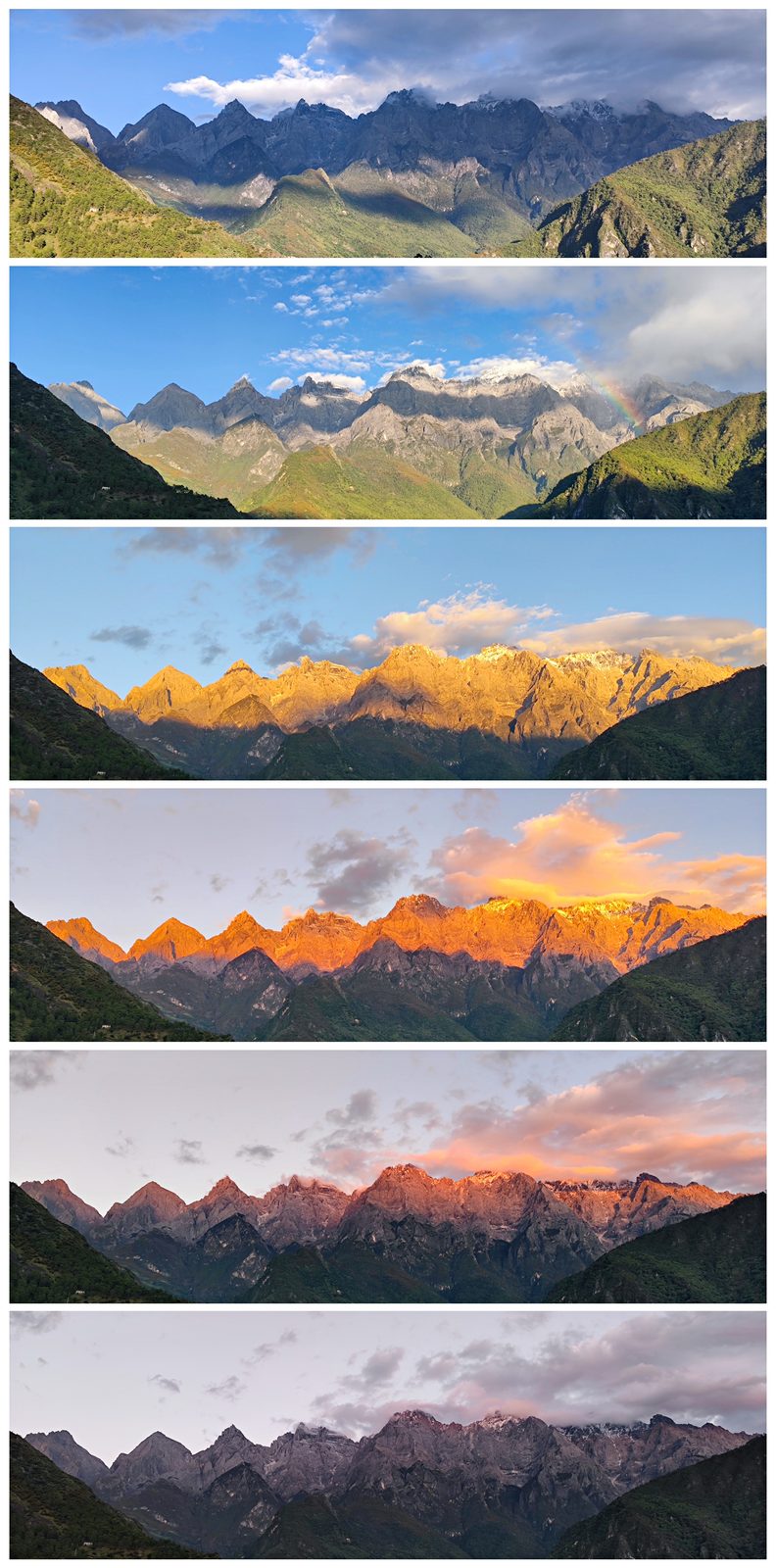
We recommend spending a night or two in Shangri-La before this trek, for better altitude acclimatisation. From Lijiang or Shangri-La, a two-hour transfer brings you to the upper gorges of Tiger Leaping Gorge, one of China's most celebrated scenic spots. Despite the crowds, it's worth the stop: a short walk brings you right beside the river, where the rapids run fierce through the narrows said to be where a tiger once leapt across — the scene is at its most dramatic in summer. After about ninety minutes here, a short fifteen-minute drive continues to the middle gorges for lunch at a local restaurant. The real hike begins in the afternoon: a two-hour climb from the middle gorges up to Halfway Guesthouse, with sweeping views across the valley to Jade Dragon Snow Mountain, and a comfortable room for the night (book ahead in peak season, as it can fill up).
Halfway → Naxi Family Guesthouse
After the climb on Day 1, this is a gentler day on the high trail above the gorge, contouring more than climbing: around two hours of mostly flat walking in the morning, past Naxi farmhouses and terraced fields, with Jade Dragon Snow Mountain's glaciers visible across the valley whenever the cloud lifts. Lunch is at Tea Horse Guesthouse, one of the trail's classic stops on the old caravan route, before an easier afternoon of about three hours on undulating trail, dropping in and out of side valleys, to reach Naxi Family Guesthouse for the night — a good, low-effort day to let the body settle in before the climbing resumes.
Naxi Family → Haba Twin Lakes
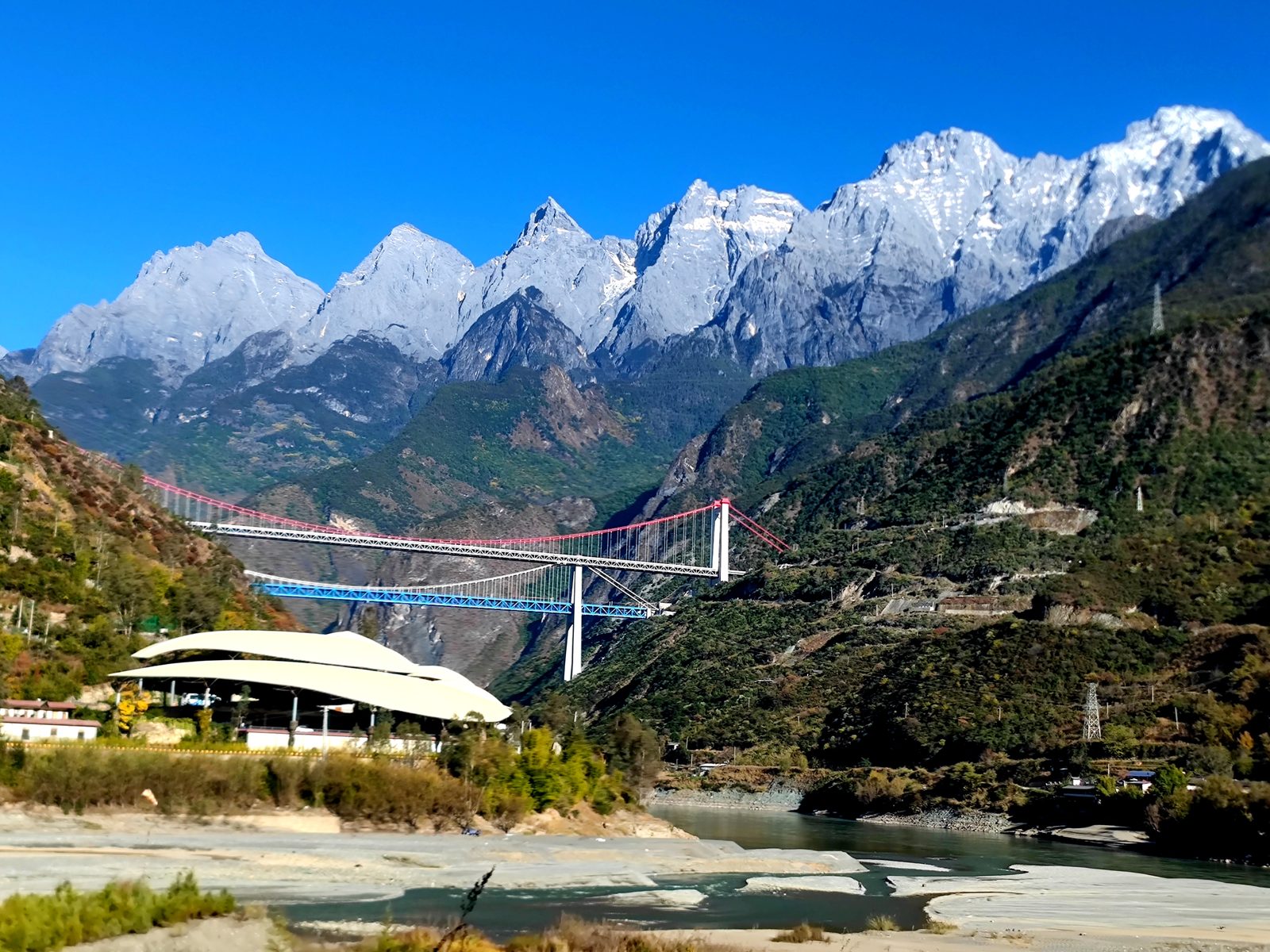
The morning finishes the Tiger Leaping Gorge trail, a two-hour walk down to the main road at the village formerly known as Qiaotou, followed by lunch in Tiger Leaping Gorge Town. In the afternoon, a ninety-minute drive on a rough mountain track (the last forty-five minutes are the roughest) climbs to Geshandi Coffee, run by the local Lisu community, the trailhead of Haba's West Valley at 3,450m — a good spot for a coffee before setting off. The trail follows a gentle valley floor for the first hour, then climbs steadily to a rest stop at 3,800m, before continuing another hour to Twin Lakes at 4,050m, where the summit's reflection often lies still on the water.
Twin Lakes → Haba Base Camp
A long day, but one you can shape to your own pace: two route options lead to Haba Base Camp, both crossing a high pass. Option A climbs directly from Twin Lakes to Zhagu Pass (4,350m) before heading straight for Base Camp, with fine views of the summit — about four to five hours in total. Option B continues to the head of the valley, crosses a 4,415m pass into a new valley, dips slightly, then crosses a second pass at 4,384m before approaching Haba again with a marvellous view over Black Lake (4,100m) — roughly seven hours all told. Either way, you arrive at Base Camp in time to rest, meet your personal mountain guide, and go through a briefing on crampon and ice axe technique before the next day's climb.
Base Camp → Summit → Haba Village
Summit day. Wake at around 2am — the guides and their climbers are already up, warming up over a solid breakfast. Departure is usually around 3am, weather permitting. You carry only a small pack: gloves, headlamp, crampons (provided by your guide), and water and snacks for a long morning. By around 4,900m you reach the snow line and the final push — for safety, you need to be here before 7am, or you may be asked to turn back. After a steady climb and, with luck, a spectacular sunrise, you reach the 5,396m summit (a 200 RMB tip to your personal guide is customary if you make it) — the cut-off for reaching the top is 10am, though most climbers in reasonable shape summit between 8 and 9am. Then comes the long descent back to Base Camp for a rest, sometimes a short nap, before continuing down to Haba Village (a horse can be arranged for the descent, booked a day ahead). Travellers not attempting the summit simply wait at Base Camp for the climbers to return, usually before noon, before everyone walks down together. Spend the night in a comfortable guesthouse in Haba Village.
Haba → Lijiang or Shangri-La
A relaxed morning at your guesthouse before the drive back to Lijiang or Shangri-La, bringing the trip to a close.
What's Included
Booking Terms
- Cancellation terms depend on how close to departure you cancel, and are confirmed in writing when your trip is booked.
- If a visa application is refused, we ask for the official refusal letter from the consulate and refund what we can once any costs already committed on your behalf are deducted.
- A confirmed place can usually be transferred to another eligible traveller.
- If safety conditions or government restrictions force a change, we'll adapt or refund the unused portion of the trip.
Get in Touch
We don't take bookings online — this site is here to show you the treks. Reach out and let's talk through dates, group size and what you're looking for.